Sustainable Farming to Carbon Credits:
The Role of Magnetic Water Treatment in Climate-Smart Agriculture
Transform Sustainability into Measurable Economic Returns
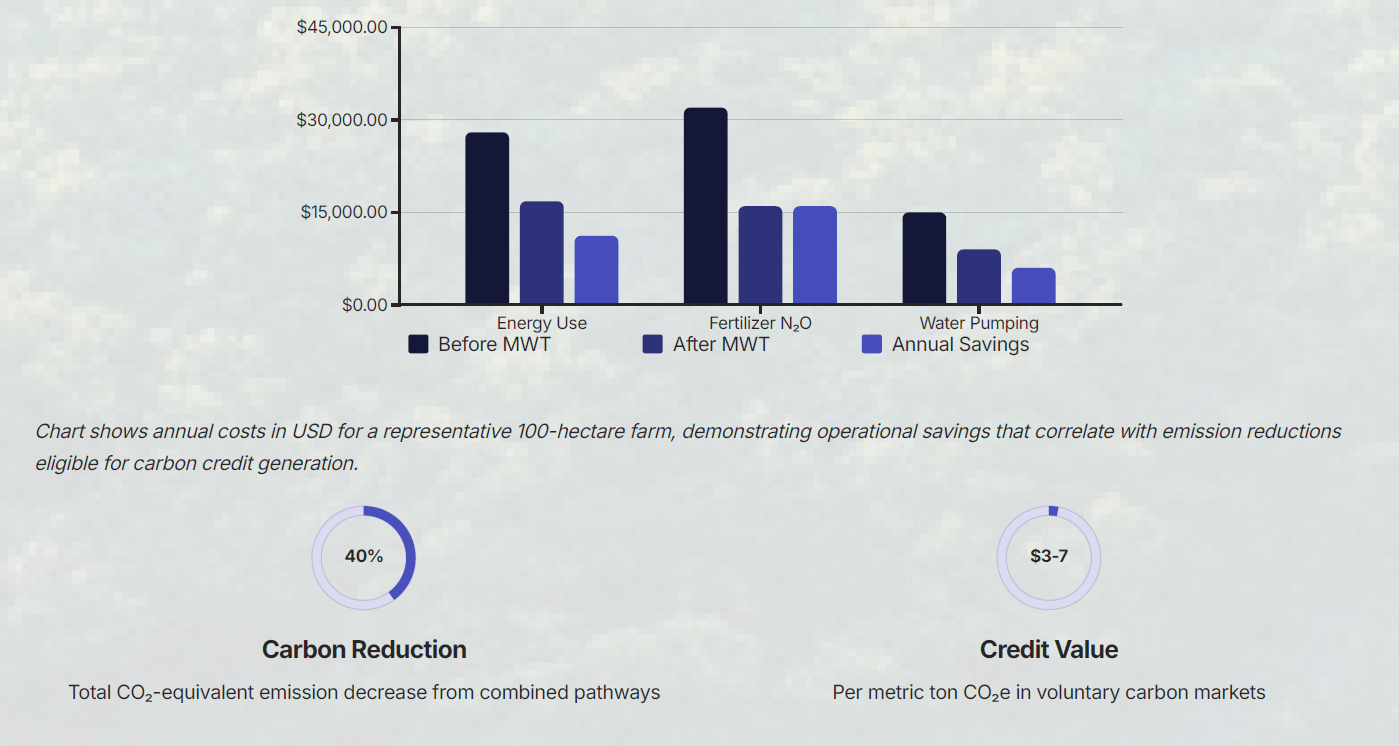
These reductions are measurable, verifiable, and auditable, forming the basis for carbon credit generation that can be monetized under recognized international frameworks.
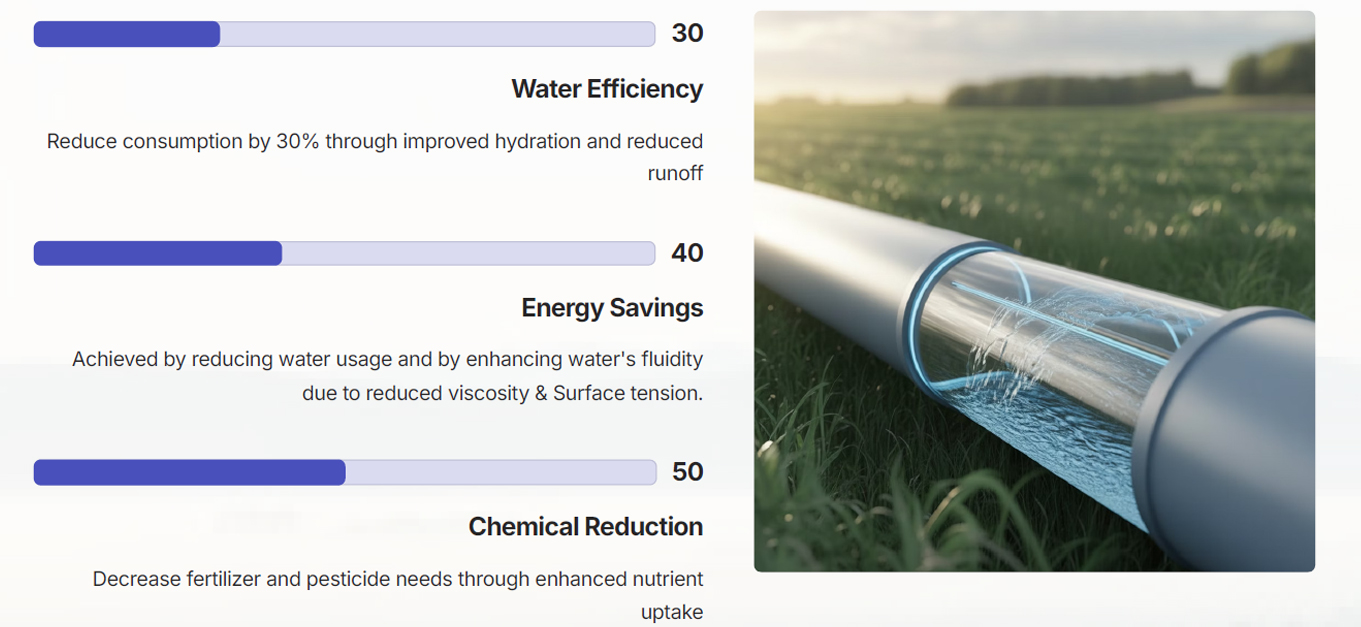
MWT integrates seamlessly with existing irrigation infrastructure. It requires no chemicals, no consumables, no filters, and no changes to farm operations, making it an immediately deployable solution. For agricultural investors and sustainability officers, MWT offers a rare combination: immediate operational savings paired with long-term revenue generation through carbon credit monetization.
Quantifiable Emission Reduction Pathways Through MWT
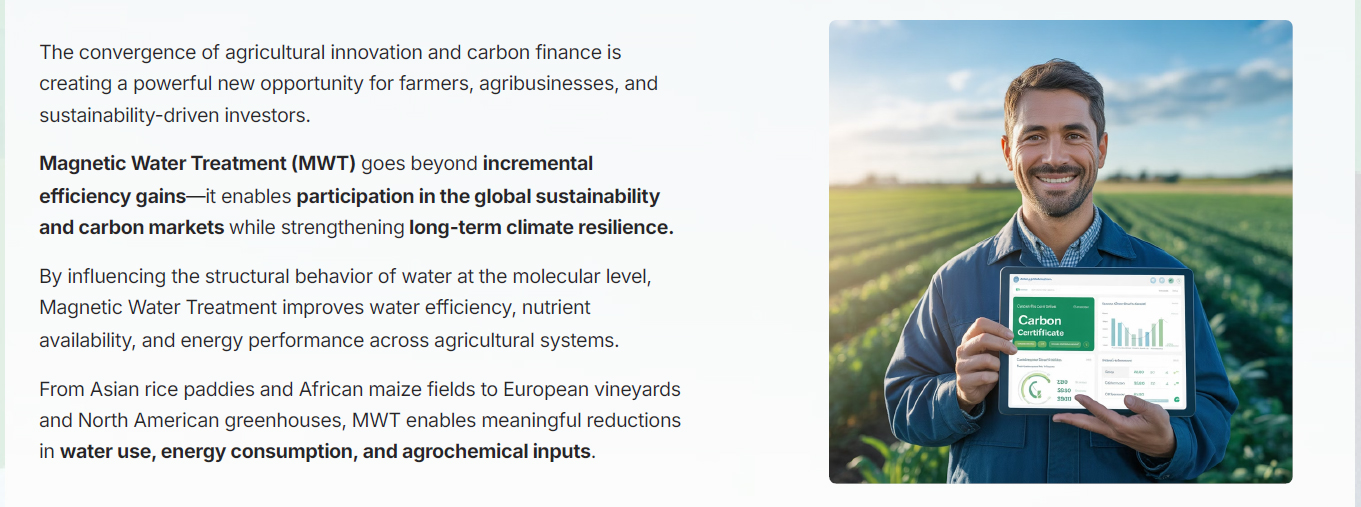
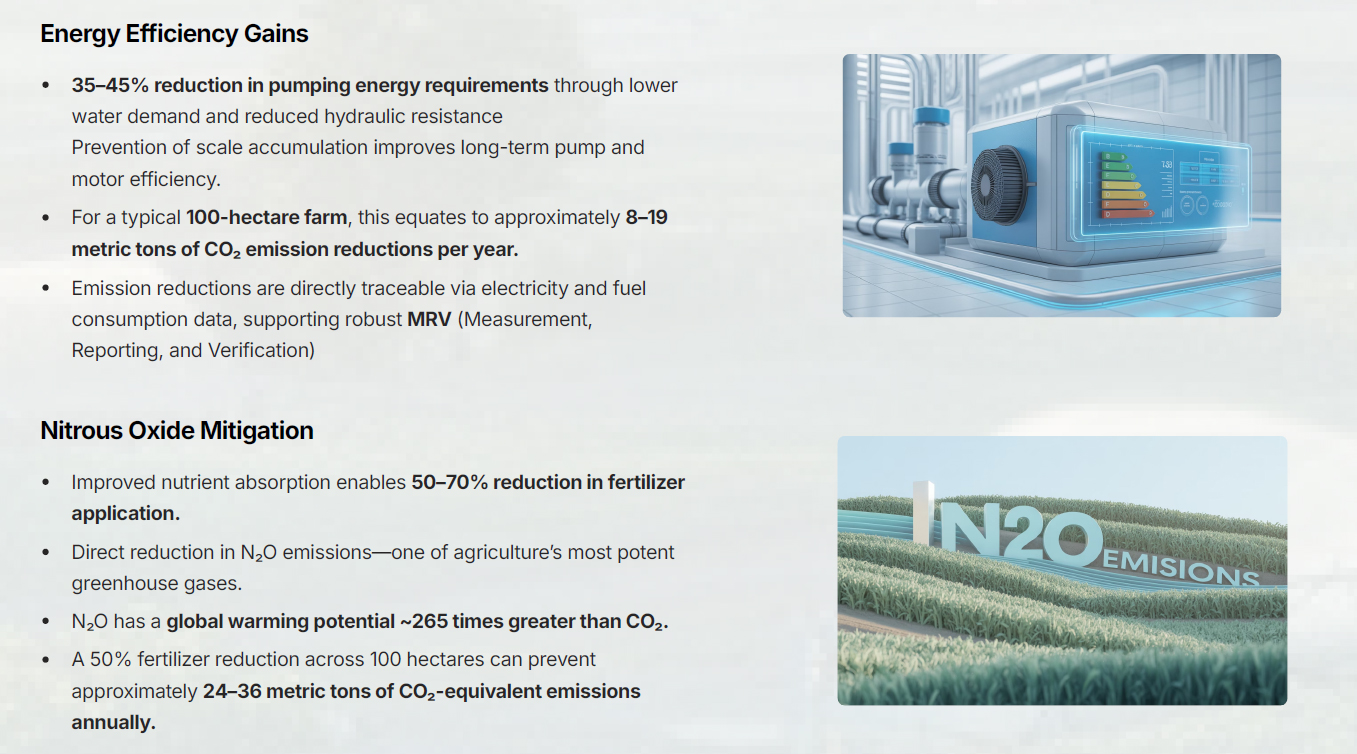
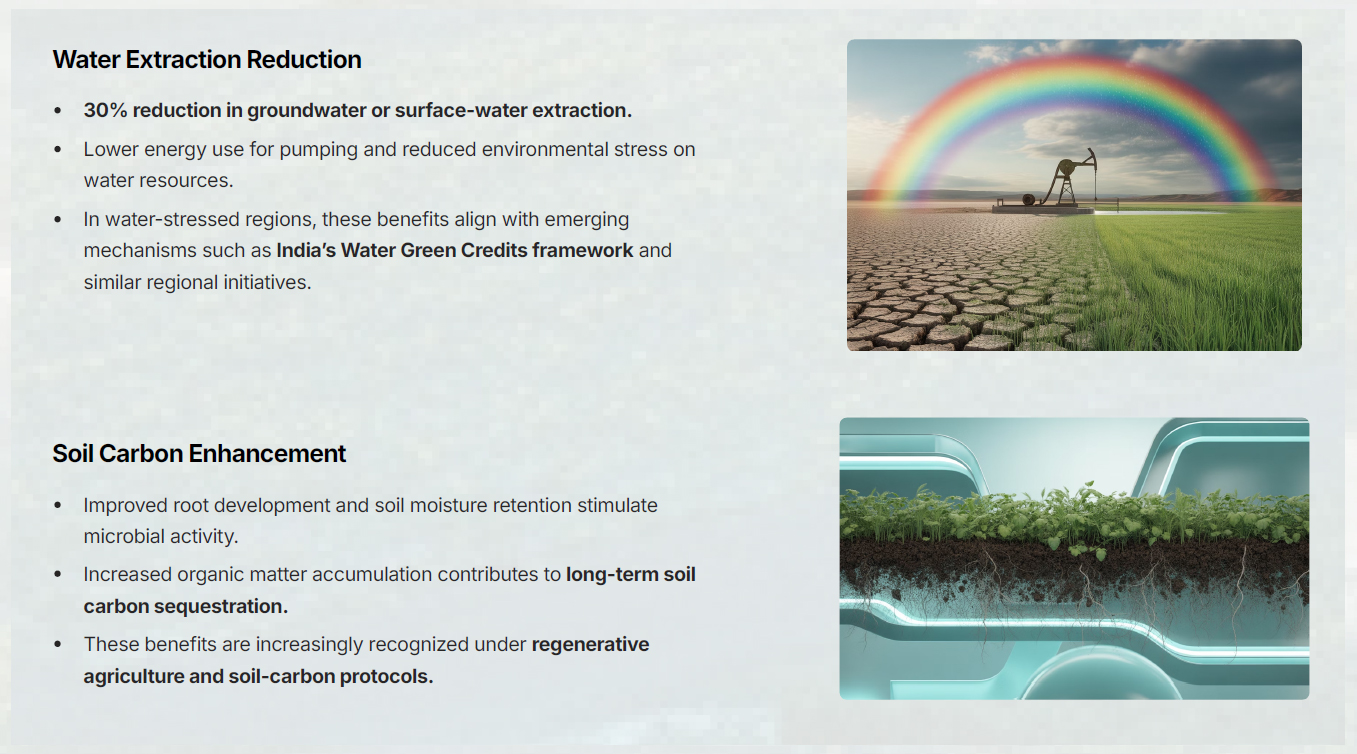
The environmental benefits of Magnetic Water Treatment extend far beyond water conservation. Creating multiple pathways for verified emission reductions, that qualify for carbon credit generation under major international standards including Verra VCS, Gold Standard, and emerging regional frameworks.
For agricultural investors and sustainability officers, the environmental benefits of Magnetic Water Treatment extend far beyond water conservation: Immediate operational savings paired with long-term revenue generation through carbon credit monetization. It opens multiple verifiable emissionreduction pathways aligned with major carbon standards such as Verra VCS, Gold Standard, and emerging national and regional frameworks.
Why Early Adoption Matters
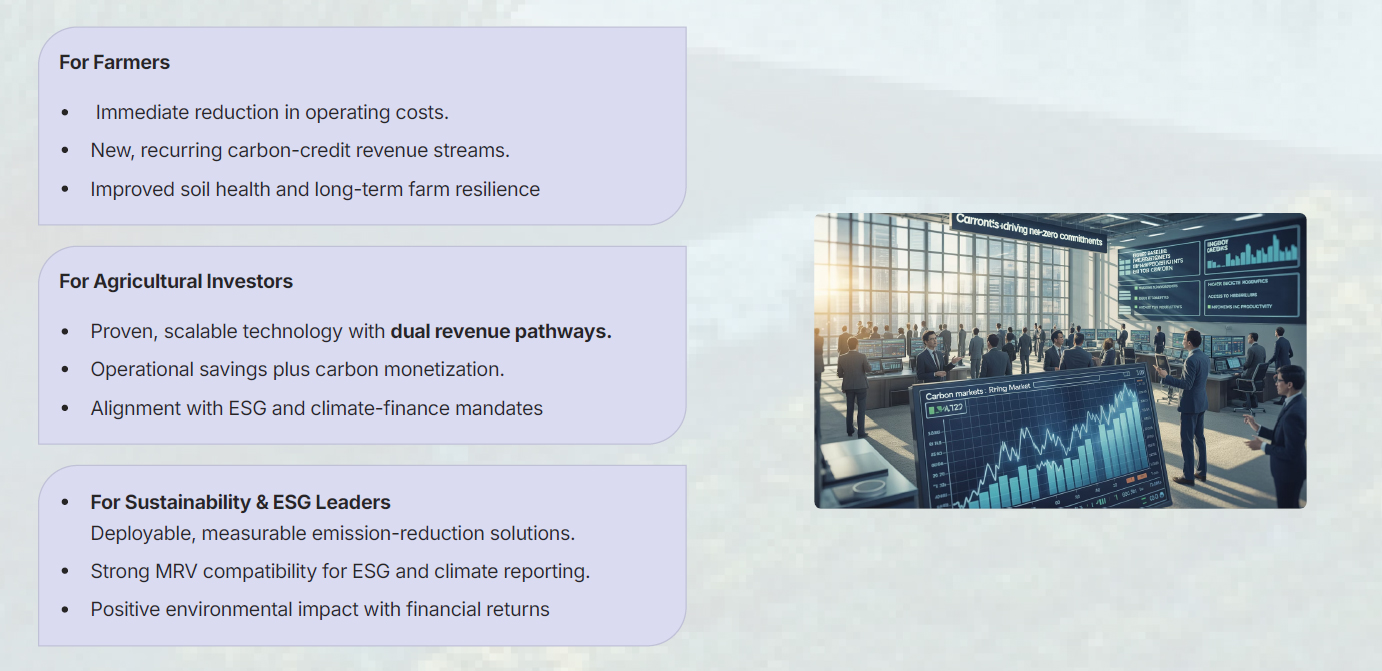
As carbon markets continue to strengthen and corporate net-zero commitments accelerate global demand, early adoption offers a strategic advantage. Organizations that act sooner are able to establish higher baseline measurements, thereby maximizing future carbon credit issuance. Early movers also gain preferential access to expanding regional incentive programs and blended-finance mechanisms, while benefiting from long-term improvements in land productivity, climate resilience, and overall asset value.
Approximate Income Generations Through Carbon Credits